

Quarterly Review of the Caucasus Economy (Second Quarter, 2026)
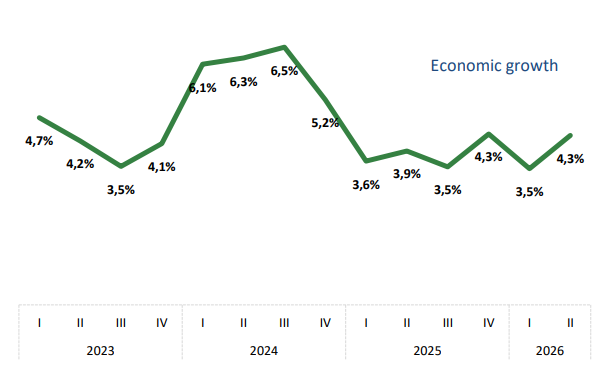
Following the slowdown of the high growth rate observed in the Caucasus during the post-pandemic period, the region's economy expanded by 4.3% in the second quarter of 2026 compared to the corresponding period of the previous year. By comparison, in the second quarter of 2025, the economic growth rate of the Caucasus was 3.9%. The upward pace of the region's economic expansion during this period is largely driven by the acceleration of the economic growth rate in Azerbaijan, whose share accounts for more than half of the Caucasian economy. The improvement in the economic situation is mostly attributed to the high growth of the services sector and a relative increase in oil production.
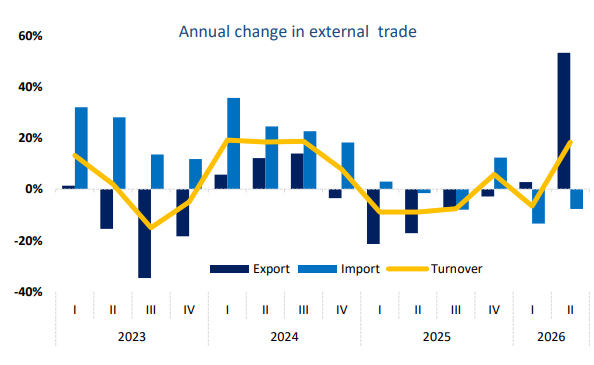
Foreign trade is a driving factor for economic growth. The region's economies are open, which determines the significant role of foreign trade in economic development. In the second quarter of 2026, the trade turnover of the Caucasus amounted to 27,808.1 million USD, exceeding the indicator of the same period of the previous year by 18.8%. In this regard, the trade dynamic improved this year. During this period, the growth dynamic is primarily characterized by the export of goods. In the second quarter of 2026, the value of exports increased by 53.2% year-on-year; however, at the same time, imports contracted by 7.7%.
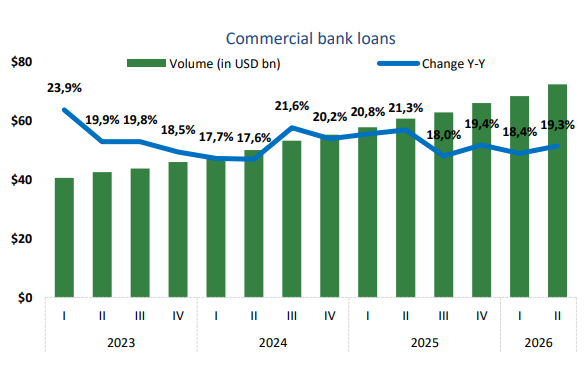
Loans issued by commercial banks are a vital source for financing local consumption and investments in the Caucasus (especially in Georgia). At the end of the second quarter of 2026, the total volume of loans issued by the region's commercial banks amounted to 72,451.3 million USD, representing a 19.3% annual increase. The annual growth dynamic of the loan volume has slowed down during this period, as this indicator stood at 21.3% in the second quarter of last year.
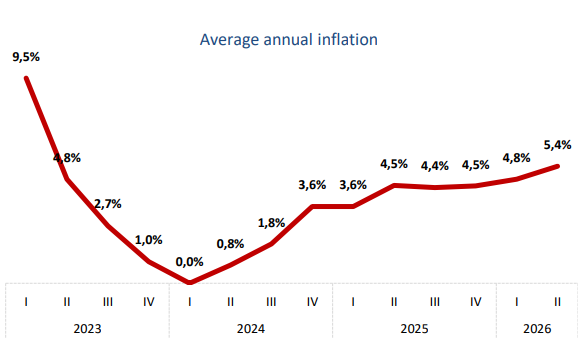
Inflation remained a challenge for the region's central banks, as the overall price level growth in the second quarter of 2026 mostly exceeded the target indicator. In terms of consumer price growth, a relatively positive situation was observed in Armenia, while a negative one was noted in Azerbaijan. In the second quarter of the current year, the average annual inflation rate of the Caucasus amounted to 5.4%, which is an accelerated pace compared to previous periods. Against this backdrop, the monetary policy rates of the central banks mostly increased slightly.
See the attached file for the entire document.